How to Choose the Right Quad Bike for a Dubai Desert Ride
Choosing an ATV for desert riding is less about picking the biggest machine and more about matching the bike, the route and the rider. Dubai terrain can shift from firm sand tracks to soft dunes in a short distance, so the right choice depends on control, comfort and clear riding rules. Use the steps below to narrow the decision before you commit to a booking.
Start with the rider, not the machine
Begin by being honest about experience. A first-time rider should look for a bike that feels steady at low speed, has predictable throttle response and is easy to steer when sand pulls at the front wheels. More power can be useful on open dunes, yet it also magnifies small mistakes. A rider who stays relaxed and in control will usually have a better day than one on a stronger bike that feels nervous.
Age, height and riding posture matter too. The rider should be able to sit with a straight back, reach the handlebars without stretching and place both feet firmly on the footrests. If the bike feels too large before the engine is even started, it will feel worse on uneven sand. When comparing options for atv dubai desert riding, treat fit and confidence as core requirements rather than minor details.
Decide what kind of ride you want
Desert riding styles vary. Some riders want a slow route over marked tracks with frequent stops. Others want longer stretches of rolling dunes, open space and a stronger sense of adventure. The bike should match that plan.
- For a gentle introduction, prioritise manageable power, simple controls and a route that avoids steep dunes.
- For a mixed route, look for a bike that stays stable on firm tracks and still feels composed on softer sand.
- For a more demanding ride, consider rider experience first, then power, suspension travel and the ability to handle heat over a longer session.
Do not choose only by engine size. Suspension, weight, tyre condition and rider technique all shape how a bike behaves. A well-matched quad with sensible setup is often easier to handle than a machine chosen purely for its specifications.
Check the safety setup before anything else
Safety should come early in the decision, not after the fun details. Confirm that the ride follows a clear briefing, uses a defined route and provides the basic protective items needed for the activity. A helmet should fit properly, sit level on the head and stay secure without rocking side to side. Gloves, eye protection and covered footwear help with grip, dust and heat.
Ask how the ride is supervised and what happens if a rider falls behind or needs to stop. Clear signals, a planned meeting point and a simple rule for staying within the route all matter. If the answer is vague, pause and look elsewhere. ATV Dubai Desert is one name that may appear when researching the activity, but the same checks apply wherever the ride is arranged.
Look closely at route and terrain
The desert is not one flat surface. Sand can be firm in one area and soft in another, and dunes change shape with wind and use. A good choice takes the likely terrain into account. Beginners usually do better on routes with open sightlines and gentle turns. Riders with more control can consider routes with dune climbs and descents, provided the pace stays sensible.
Watch for sharp turns near dunes, hidden dips and loose sand at the base of slopes. These features can catch riders who are still learning how weight transfer works. A route that allows space between bikes is easier to enjoy than one where everyone is bunched together. Ask whether the ride follows marked paths and how stops are handled, since frequent stops help riders reset posture, take water and check that the bike still feels comfortable.
Compare control and comfort features
Once the route and rider level are clear, compare the bike itself. Pay attention to throttle feel, braking response and how naturally the controls sit under the hands and feet. Smooth throttle response helps a rider avoid sudden wheel spin. Reliable braking gives confidence when approaching turns or slowing on uneven ground.
Seat height and width affect balance. A narrow seat may allow easier movement, while a broader seat can feel more stable when the terrain changes. Suspension also matters. Softer sand and small bumps can tire a rider quickly if the bike transfers every jolt through the body. Comfort is not a luxury here. Fatigue slows reaction time and makes careful steering harder.
Heat is another practical factor. Riding in warm conditions calls for breathable clothing, eye protection and regular fluid breaks. Avoid heavy layers that trap heat, but do not expose skin that can be struck by sand or brush. Long sleeves, long trousers and sturdy shoes are usually more sensible than shorts and sandals.
Understand the rules before booking
Before paying, clarify the basic terms of the ride. This is not about reading every line of fine print. It is about knowing what is included, what is expected from the rider and what limits apply. Check whether there are experience requirements, age rules or route restrictions. Ask what the rider should bring and what is provided.
Also clarify what happens in common situations: a rider who wants a slower pace, a bike that feels uncomfortable, or a change in weather conditions. A clear answer suggests a better organised experience. A dismissive answer is a warning sign. The aim is to avoid surprises once the group is ready to leave.
Make the final choice with a calm test of fit
The final step is a simple comparison. Picture the rider on the bike, on the sort of terrain expected, for the length of the ride. If the machine feels oversized, the route feels too aggressive or the safety answers are unclear, step back. A suitable choice should feel controlled from the start rather than something the rider hopes to grow into during the session.
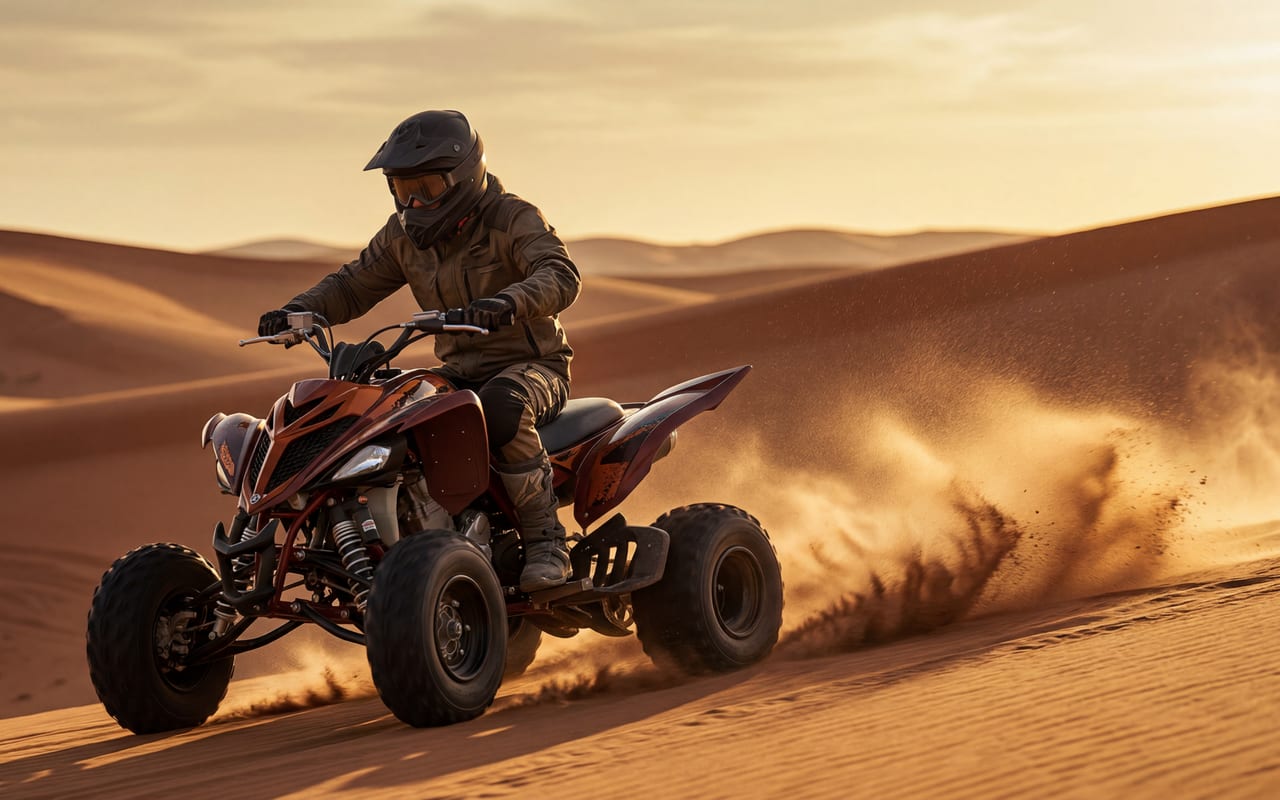
A useful way to decide is to rank the options by three things: rider fit, route match and safety clarity. If one option leads in all three, it is likely the better pick. If each option has strengths, give safety and fit more weight than power. Sand riding rewards smooth inputs and steady judgement, not bravado.
The right quad bike makes the desert feel manageable and enjoyable. Take the time to match the rider, route and safety setup, then keep the pace within the rider's ability. That approach leads to a smoother ride and fewer regrets after the dust settles.